
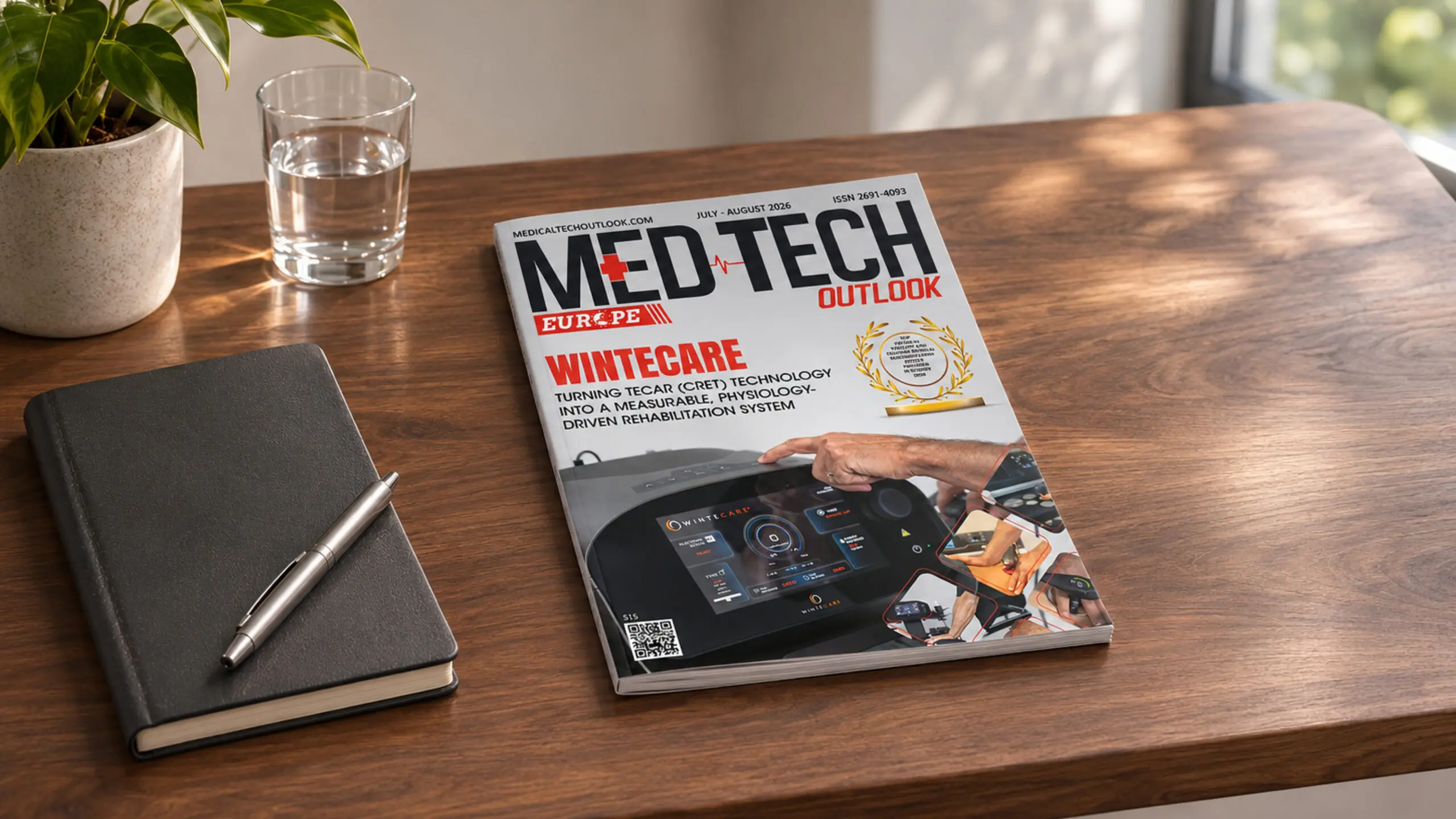

TECAR stands for a form of capacitive and resistive energy transfer, also known as CRET.
In therapeutic applications, the experience of the treating professional, the tissue response, and the feedback from the patients traditionally play an important role. Therefore, in the current article, MedTech Outlook addresses a central question: How can the actual energy transfer during an application be made more visible and controllable?
With T~Advanced Wintecare follows exactly this approach.
The system is designed to capture energy transfer in real time during application. This provides the treating professional with additional measurable information in addition to their clinical experience.
The point here is not to replace therapeutic expertise with technology. Wintecare describes a symbiotic relationship: The technology provides additional information, while treatment, adaptation, and clinical decisions remain in the hands of the professional.
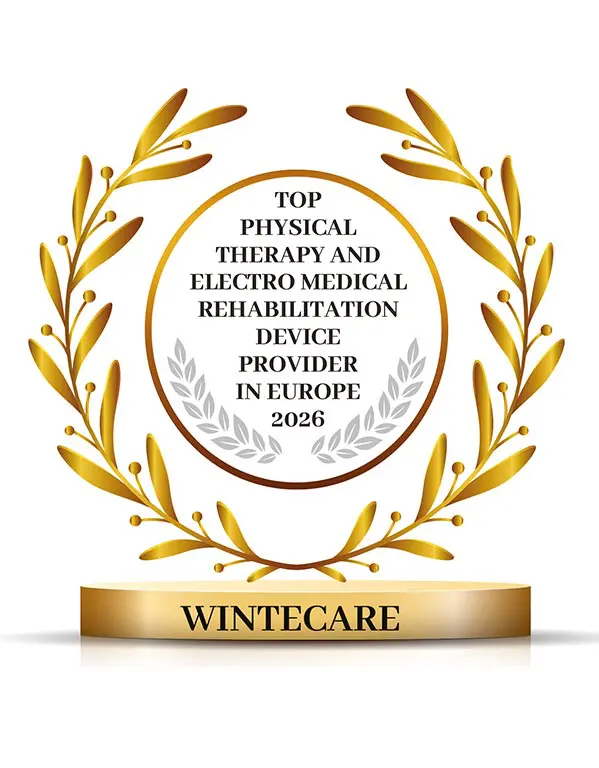
T~Advanced combines four different approaches within one system: Capacitive, Resistive, Dosimetric and Static.
The capacitive and resistive working modes differ in terms of the electrical properties of the target structures and the way energy is transferred. This allows the treating professional to differentiate the application depending on the intended purpose and the structure being treated.
Instead of relying solely on time and subjective perception, a defined amount of energy can be transferred and controlled during use. This provides the treating professional with an additional objective parameter for controlling the treatment.
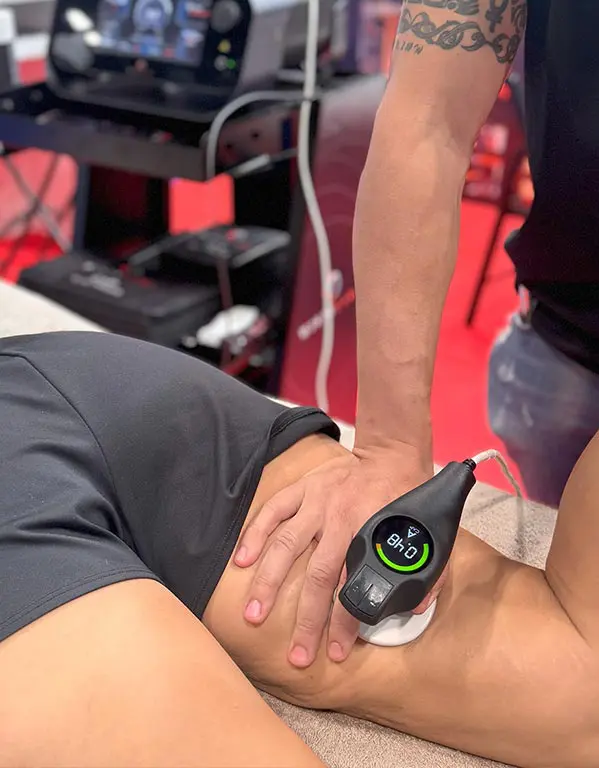
In static mode, the energy transfer takes place via fixed electrodes. This leaves the hands of the therapist free, for example for manual techniques or to accompany active or assisted movements.
One thought runs through the entire article by MedTech Outlook: Technology should support therapeutic expertise and not replace it.
This is also evident in a relatively simple detail.
According to Wintecare, T~Advanced does not require a conductive cream. This ensures direct contact with the tissue without a sliding cream layer between the hand and the skin. This allows manual techniques and energy transfer to be combined with each other.
This approach is particularly interesting for physiotherapists: technology and manual therapy are not seen as opposites, but as tools that can be combined with each other within the same treatment.
According to Wintecare, it also relies on the combination of different perspectives in its product development.
The company collaborates with European universities and laboratories and combines scientific research with clinical experience and feedback from everyday practice. Additionally, experiences from professional performance sports contribute to the further development of technologies and application concepts.
Wintecare describes this interaction as a continuous process: research, clinical feedback, and market requirements influence each other and flow into product development.
Measurability, controllable energy transfer, and the integration of technology with therapeutic expertise are topics that show the direction in which modern physical therapy can evolve.
The fact that MedTech Outlook Wintecare is highlighting it again after 2018 makes the current publication all the more gratifying for us.
Would you like to learn more about T~Advanced and Wintecare’s development approach?